Prefabs and overrides
ActionFlow 2 follows Unity's prefab ownership model for both Game Creator data and graph layout.
Prefab asset
Open a prefab asset graph in Prefab Mode to edit the shared source behavior and default layout. Saved changes flow to instances unless an instance overrides the same data.
Prefab instance
When you open a scene instance, ActionFlow 2 displays a banner:
Prefab Instance: edits create overrides
Value and structural edits become normal Unity prefab overrides, just like changes made through the Inspector. Layout changes can also create instance graph-layout overrides.
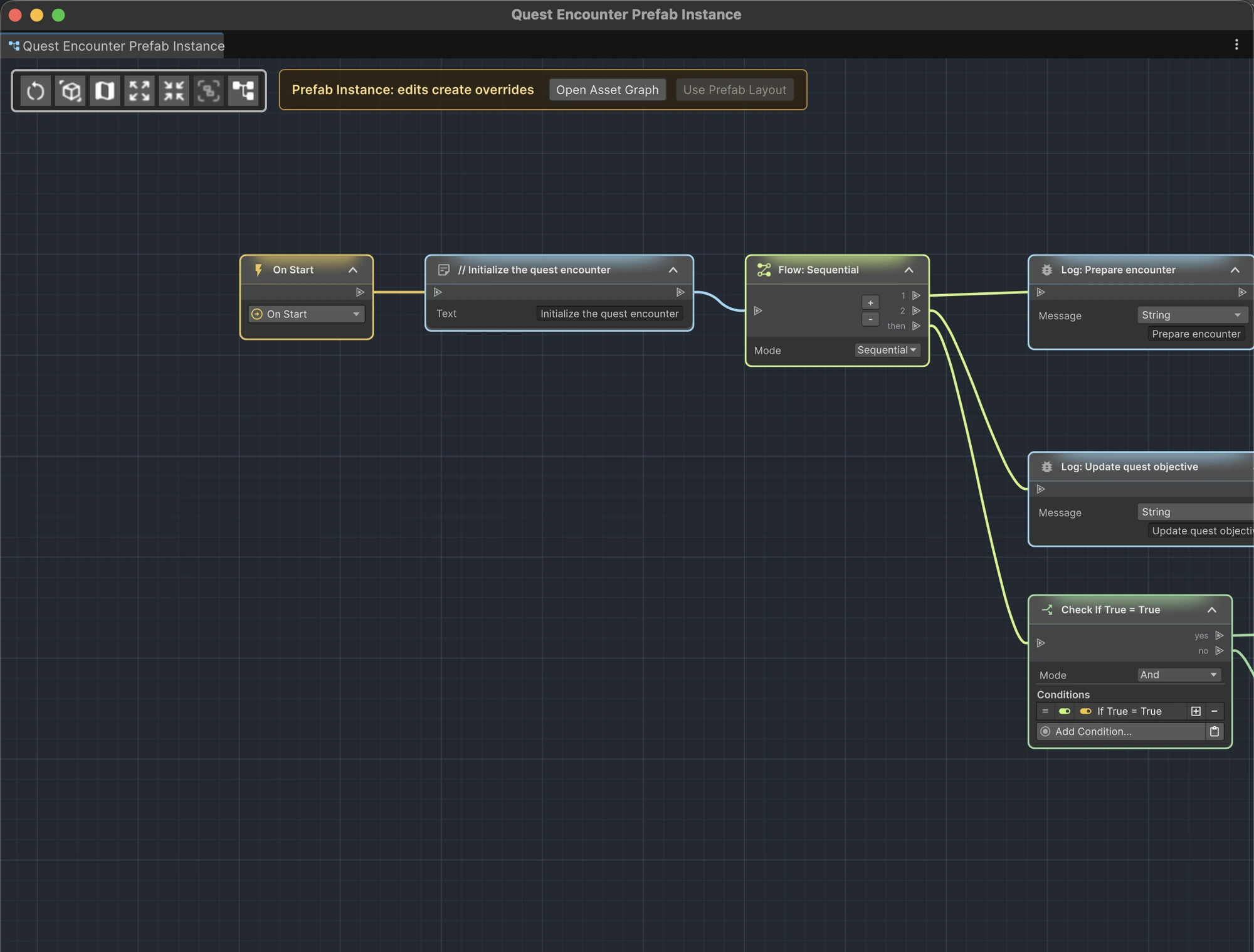
Open the asset graph
Choose Open Asset Graph from the prefab instance banner to open the corresponding prefab source in Prefab Mode. Use this when the behavior should change for every instance.
Use prefab layout
Choose Use Prefab Layout to return an instance to its inherited graph layout when that control is available. This affects layout ownership; inspect Unity's prefab overrides separately before reverting runtime values or structure.
Apply and revert
Treat Apply and Revert as prefab operations, not graph-only commands:
- Finish the current graph gesture.
- Let ActionFlow 2 synchronize the completed edit.
- Review overrides in Unity.
- Apply or revert at the intended inheritance layer.
For nested prefabs and variants, verify whether you are editing the immediate source, a variant, or a scene instance before applying changes.
Do not dismiss stale-state warnings
If a prefab source changes while an instance graph has pending edits, ActionFlow 2 may block or mark the graph stale instead of silently replacing your work. Resolve the source/instance conflict before continuing.
Local Variable IDs on prefab instances
Game Creator may show Another Variable Component has the same ID after more than one instance of a prefab containing Local Name Variables or Local List Variables is placed in a scene. Each instance initially inherits the ID stored by the prefab asset.
When Save is disabled on the Local Variables component, the warning is cosmetic for ordinary component-local variable access. When Save is enabled, duplicate IDs are unsafe because instances can collide in Game Creator's save/load registration and saved data.
Expand the component's ID field and choose Regenerate on each scene instance, keeping the generated ID as an instance override. Repeat this for new instances dragged from the Project window. Do not apply one regenerated ID back to the prefab source, because its instances would inherit the same ID again.
This ID belongs to Game Creator. ActionFlow 2 neither creates nor silently changes it, because doing so could change persistent save identity. See Game Creator's official documentation for Local Name Variables and Local List Variables.
A practical ownership rule
- Edit the prefab asset for shared behavior and shared layout.
- Edit the instance for intentional per-instance behavior or presentation.
- Review Unity overrides before Apply or Revert.