Open your first graph
ActionFlow 2 opens component graphs, native reusable assets, and compatible LogicBlock assets. Start with the surface that matches the data you want to edit.
Open from the Inspector
- Select a GameObject containing a Trigger, Actions, Conditions, or compatible Story Engine Rule component.
- In the Inspector, choose Open Graph.
- Keep the Inspector in graph-owned mode while editing through the graph.
The graph window opens for that GameObject and restores its saved viewport and layout.
Open from a component menu
Open the component's context menu and choose Open as GC2 Graph. This command is available for Trigger, Actions, Conditions, and compatible Story Engine Rule components.
Read the first graph
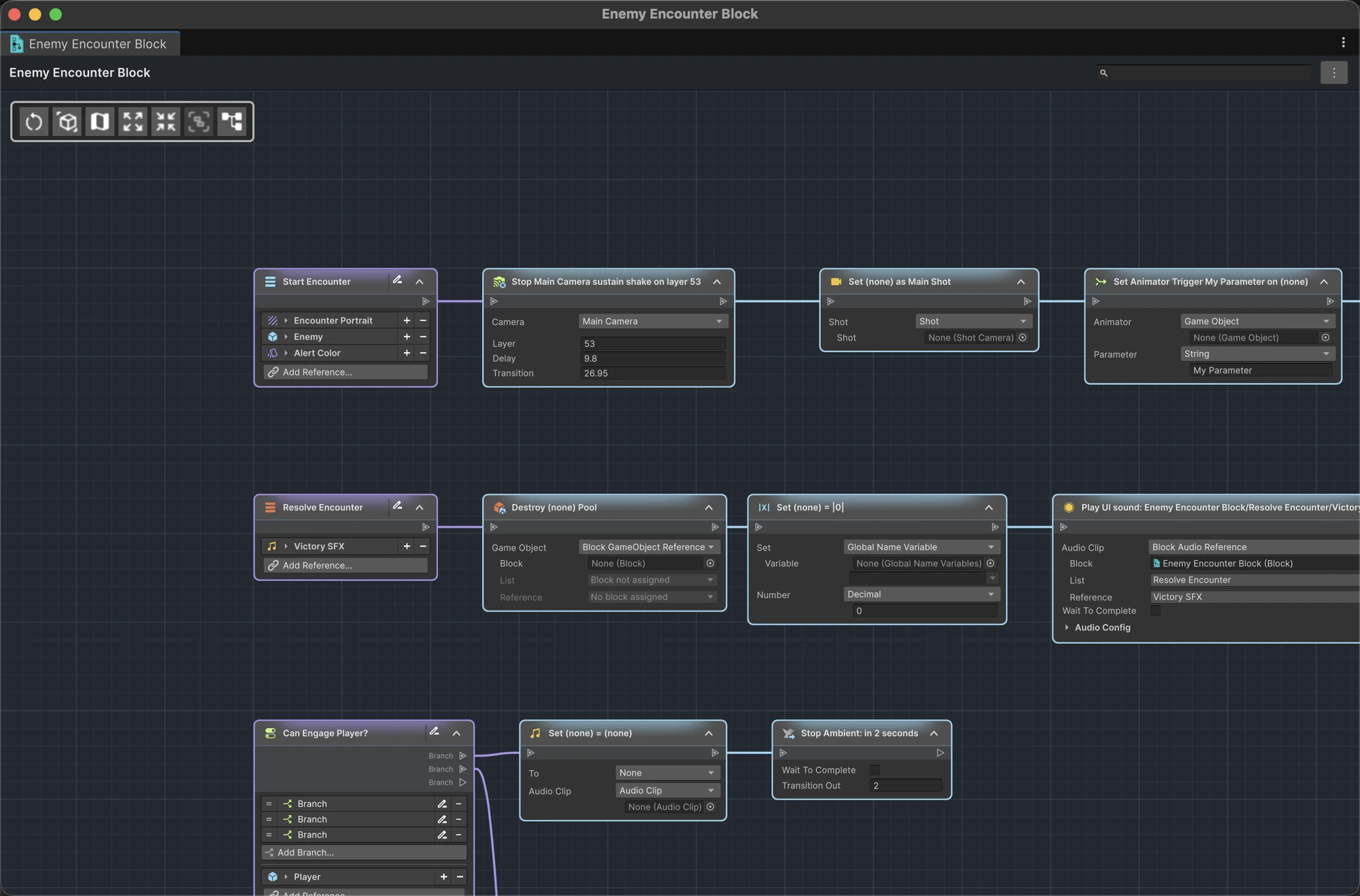
- Gold nodes are graph roots such as triggers; compatible Story Engine Rules use teal roots with their criteria embedded in the node body.
- Blue connections show the direction of execution.
- Each node body contains the same serialized fields you would edit in the Game Creator Inspector.
- The toolbar in the upper-left controls the viewport, minimap, node expansion, placemats, and automatic layout.
Follow the connections instead of retracing nested Inspector lists: each node's incoming path shows which root, branch, or Flow output owns it.
Compatible Game Creator Events and Instructions from installed modules appear in the same node picker and retain their normal serialized fields. When a compatible Story Engine version is installed, the picker also offers Rule.
Start with a small behavior
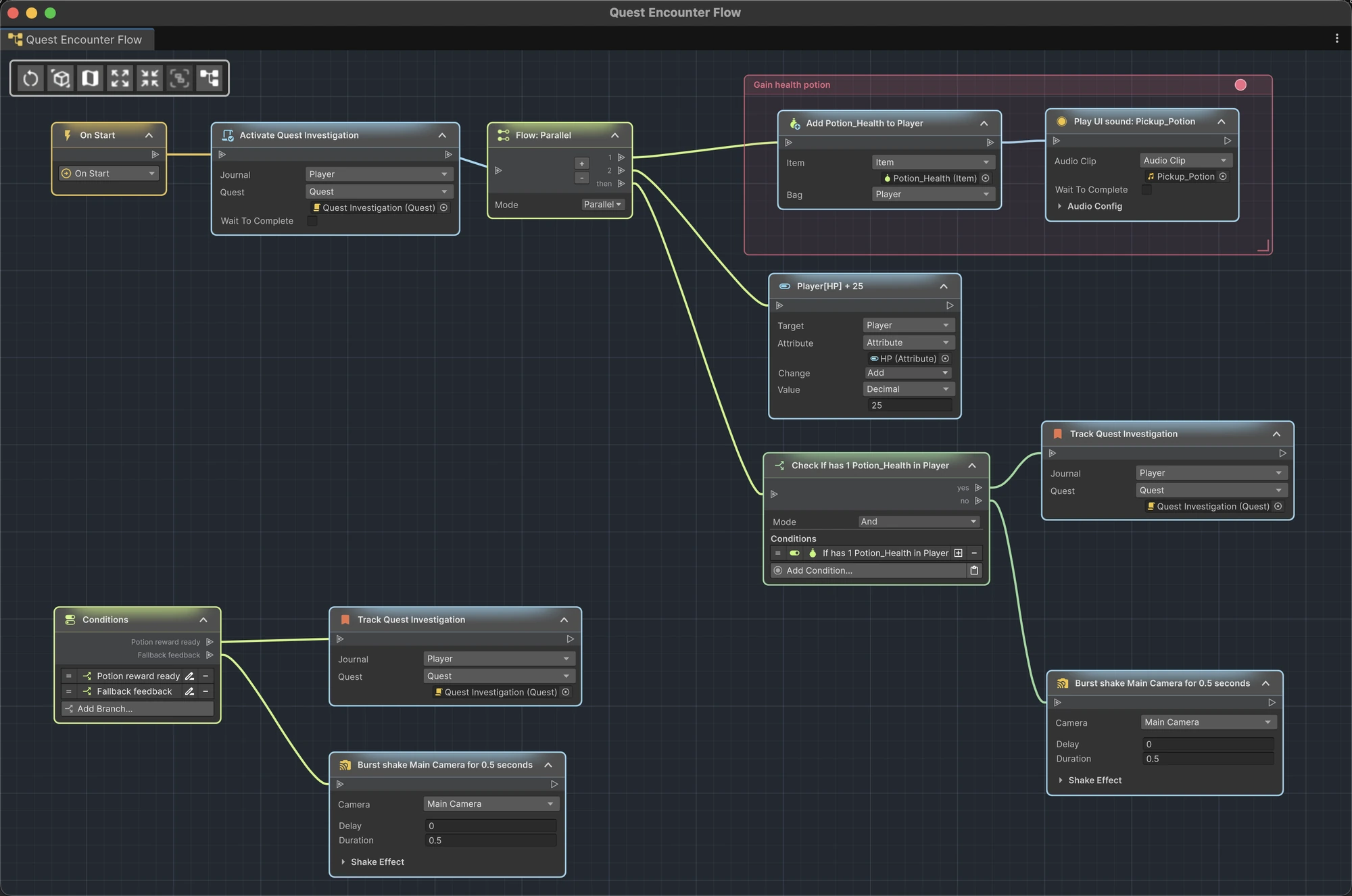
A trigger followed by two or three instructions is enough to learn connecting, inserting, and deleting nodes before you open a production graph.
Next, take a tour of the graph workspace.
Open a reusable ActionFlow asset
- In the Project window, use Create › Game Creator › ActionFlow 2.
- Create an Instruction Asset or Branch Asset.
- Double-click the asset, or select it and choose Assets › Open in ActionFlow 2.
The graph has one permanent root. Add nodes from that root or from an existing reachable output. Define typed parameters in the root and supply their values in the Game Creator instruction that calls the asset.
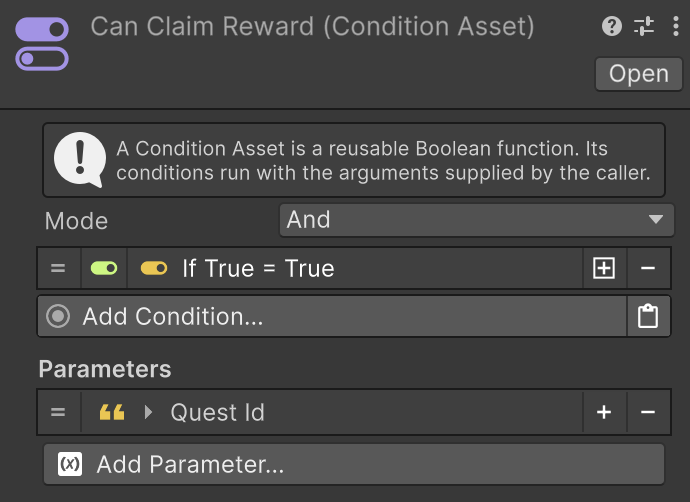
Condition Assets use a focused Inspector rather than a graph because their condition list has no graph topology.

Open a LogicBlock asset
When LogicBlock is installed:
- Select a LogicBlock Block asset.
- Choose Assets › Open in ActionFlow 2, or double-click the asset.
- Start in Overview, then open an individual instruction or condition list for focused editing.
Learn about LogicBlock integration.